
A board
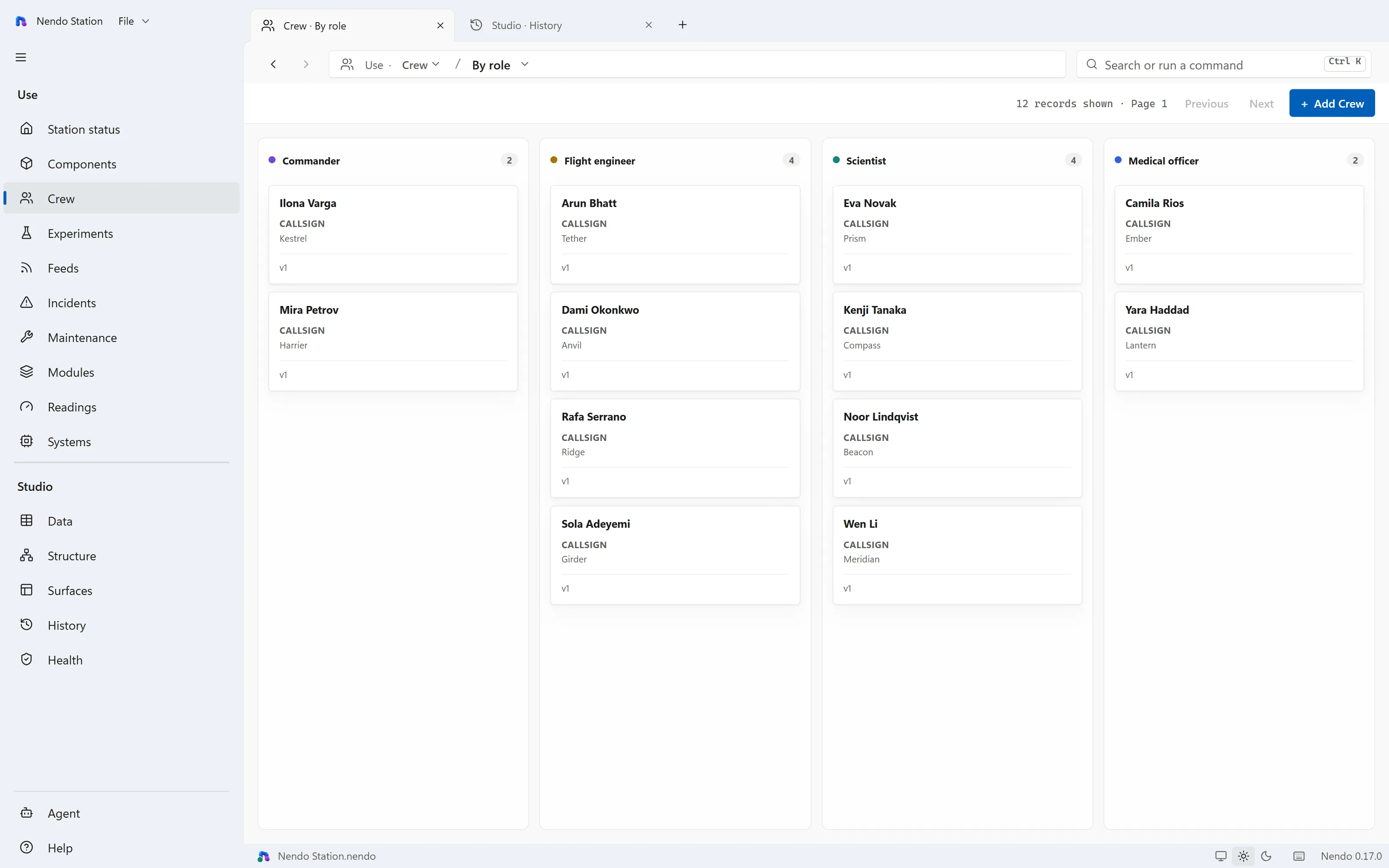
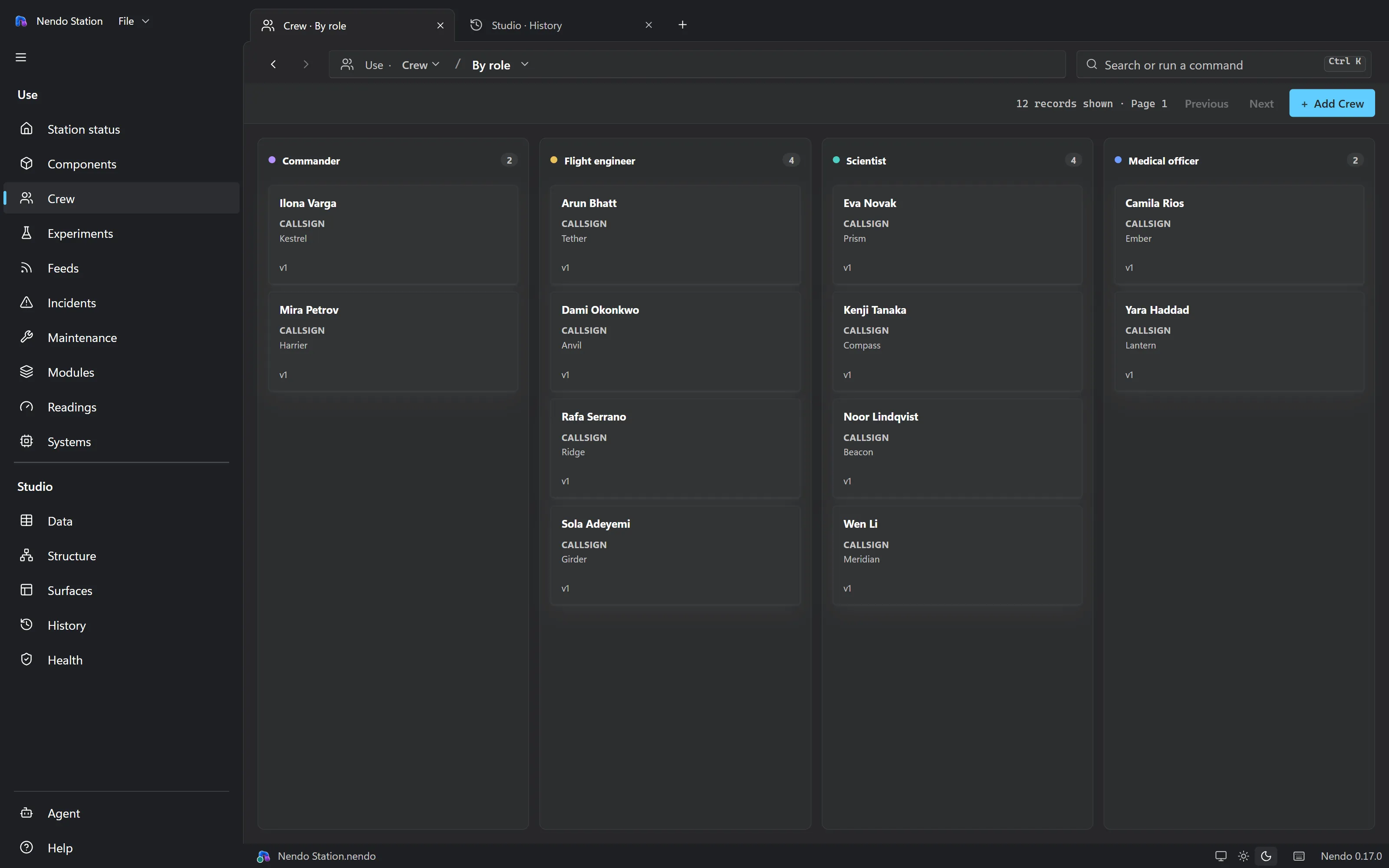
Columns come from a choice field or a reference, each with a count. Drag a card to another column and the record changes with it.
Experimental research prototype, v0.17.0 for Windows x64
A Nendo application is one SQLite file. It starts empty, and you and your coding agents shape it into a working application with its own schema, data, forms, boards, record pages and history. Nothing is generated or built, and changing it never means starting over.
Nendo (粘土) is Japanese for clay.

The problem
An AI can write a small application in minutes, but the result is another silo. The data is tied to code nobody intends to maintain, every change means generating it again, and there is no visible history or way back. When the code breaks, the data is stuck inside it.
Low-code tools fix some of this, but your application then lives on someone else's platform, in their format. You can't keep it as a file to copy, inspect and open offline ten years from now.
The idea
A .nendo file holds the schema, the data, the screens and the history. People and agents change it in place with a small set of typed operations. The desktop app, the web Workbench and an agent connected over MCP all use the same operations and the same validation.
Agents
Agents connect over MCP, and only from this computer. They get no SQL, no database path and no file access, just a fixed set of typed operations. Nendo tries each change on a separate copy of your file and shows you the result as a readable diff. When you accept, it applies the same operations to your file. The copy is never swapped in.
claude mcp add --transport http nendo http://127.0.0.1:41763/mcp
codex mcp add nendo --url http://127.0.0.1:41763/mcp
That address is all the configuration a client needs; there is no key or password. The flip side is that any program on this computer can connect at the access level you have set, so turn agent access Off when no agent is working.
Claude Code proposes
4 operations, validated on a clone of Nendo Station.nendo
Reversibility: reversible. Removing the board removes only the board.
Accepted. The same 4 operations were applied to Nendo Station.nendo.
Rejected. Your file did not change.
An illustration. A real proposal lists the exact operations the agent sent.
Each screen below is stored in the file as a tree of typed parts, and Nendo builds the screen from it when the file opens. Nothing is generated, so there is no code to lose or review.
Columns come from a choice field or a reference, each with a count. Drag a card to another column and the record changes with it.
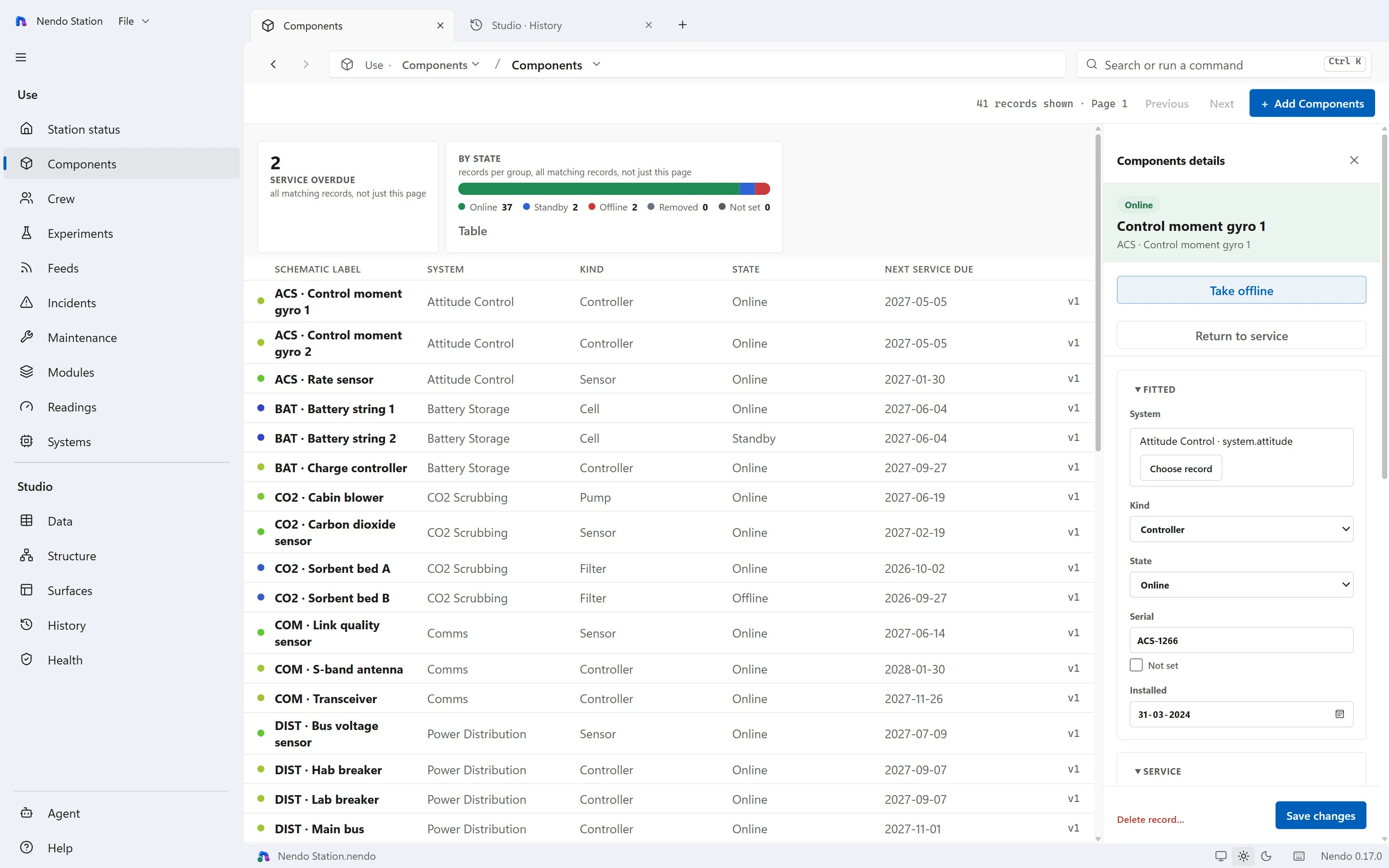
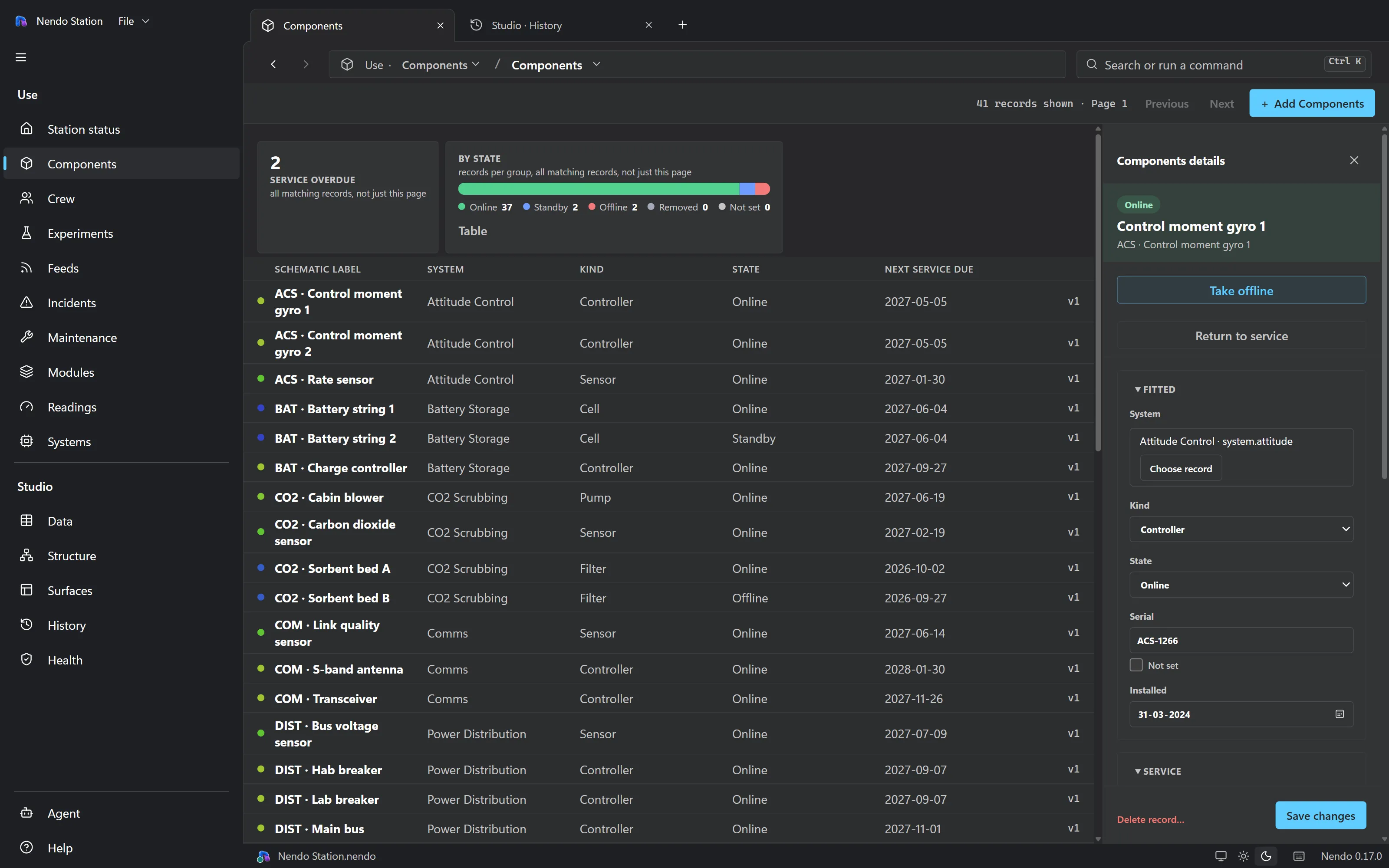
A coloured header, related lists, collapsible sections, and commands such as Take offline and Return to service.
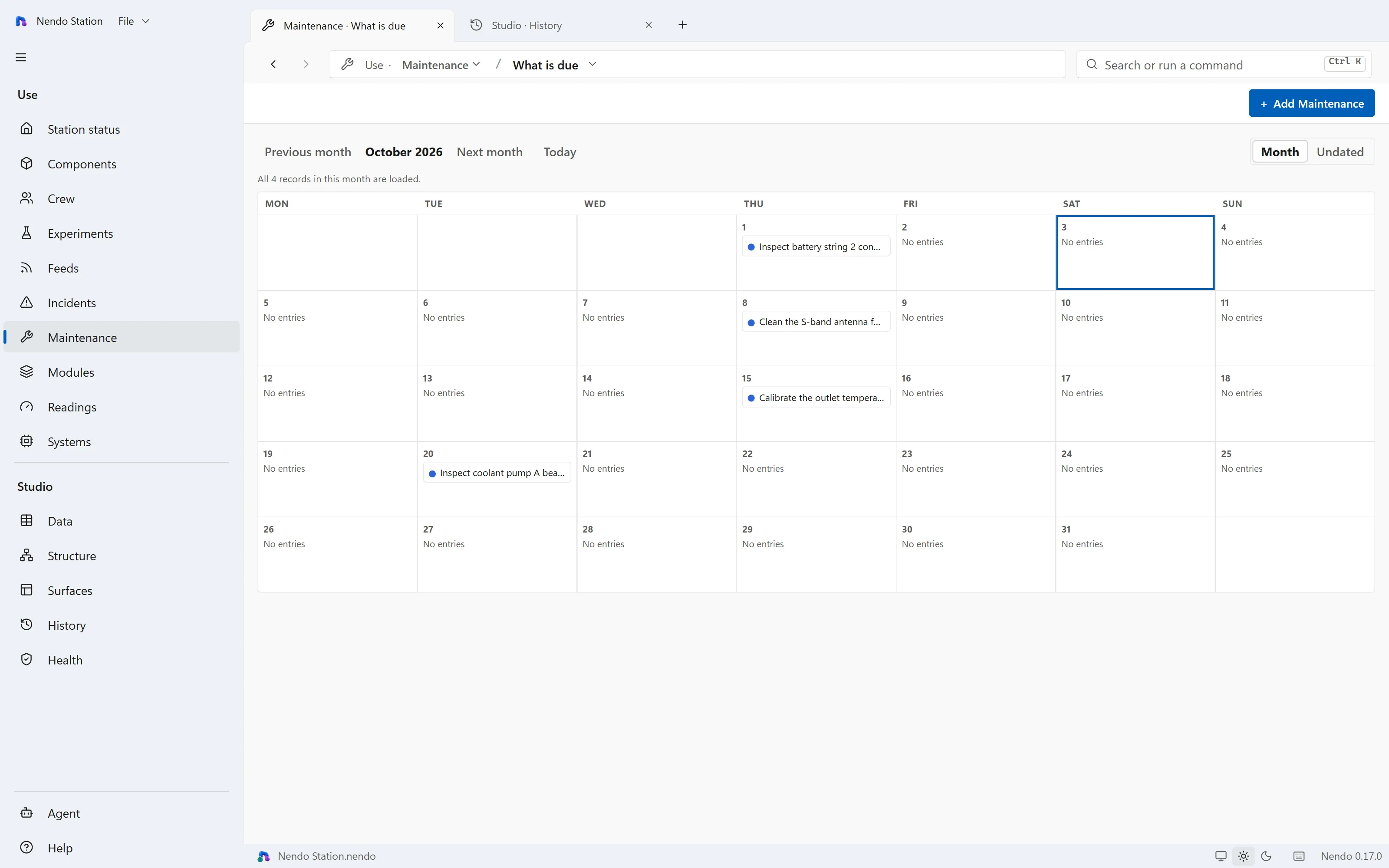
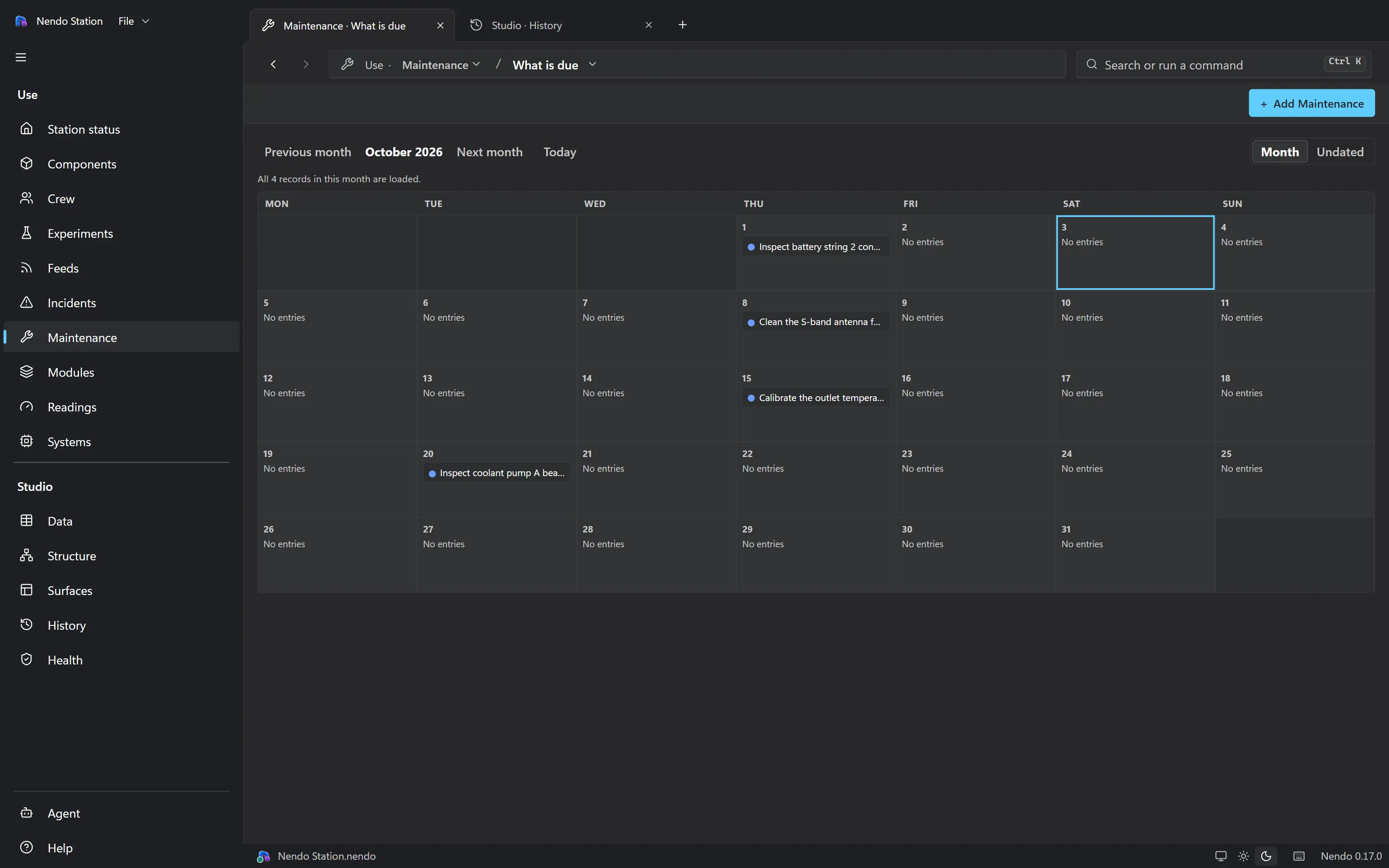
Records placed on a month by a Date field. Times of day and recurring events are not supported.
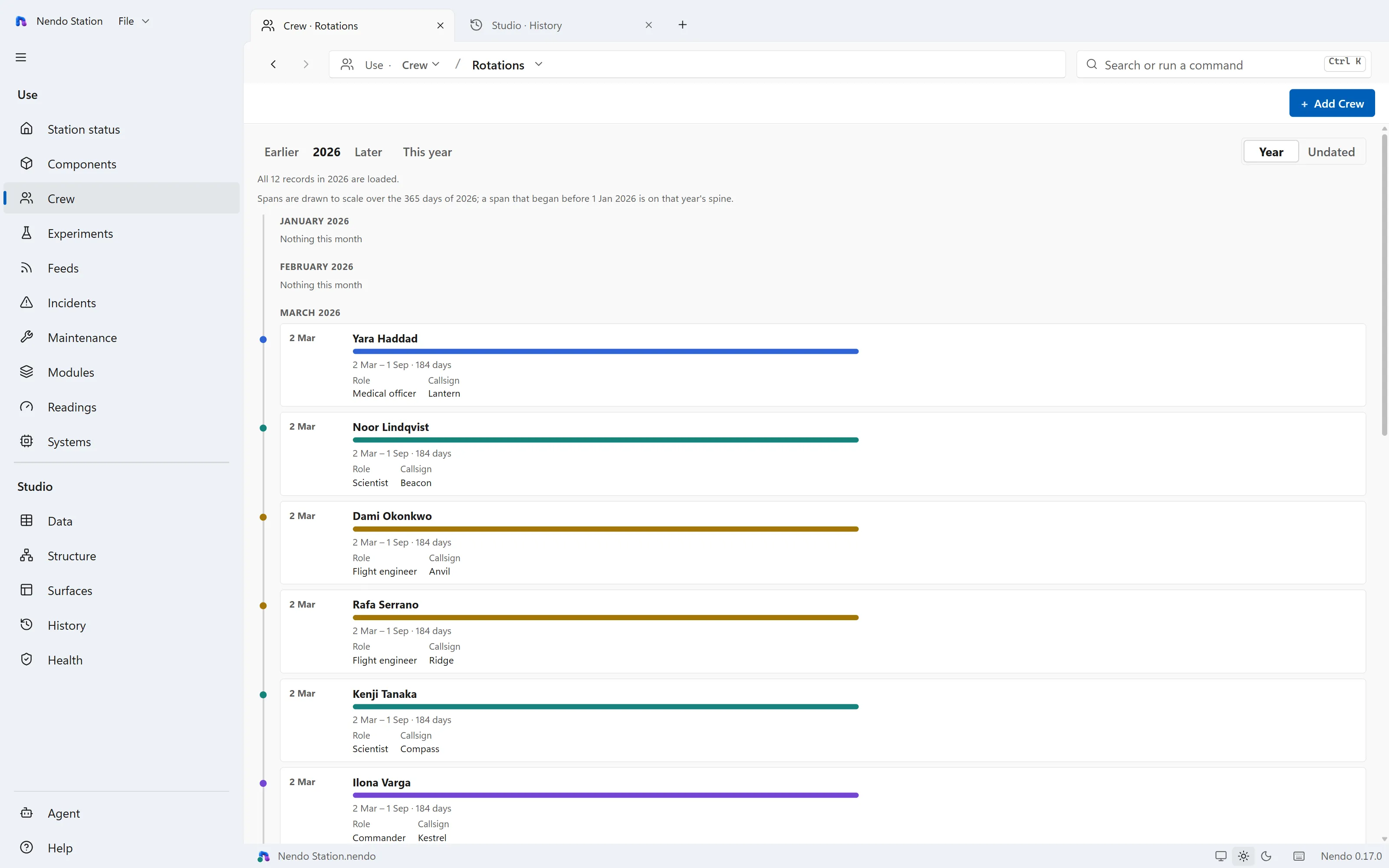
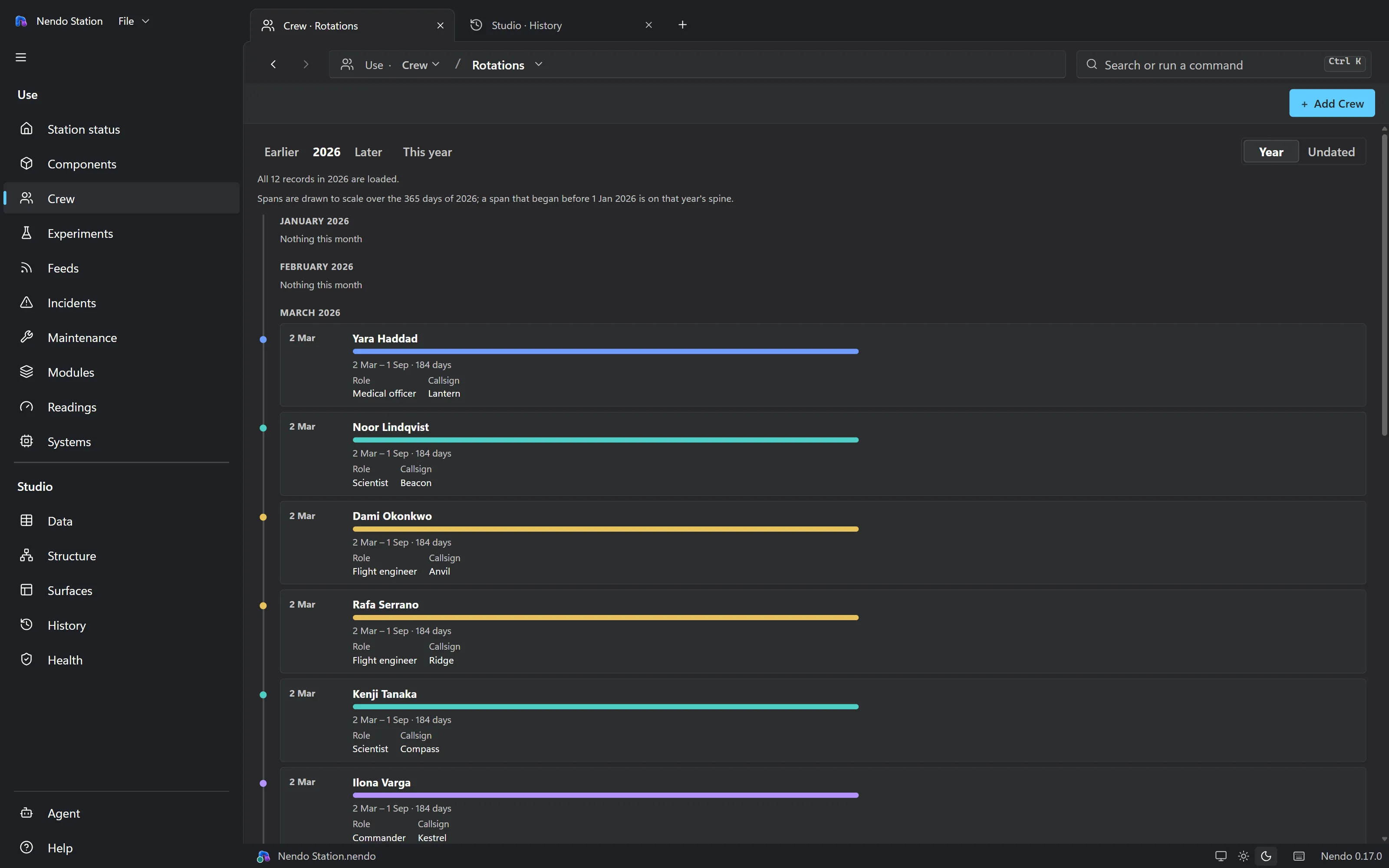
Records laid out by start date, one calendar year at a time.
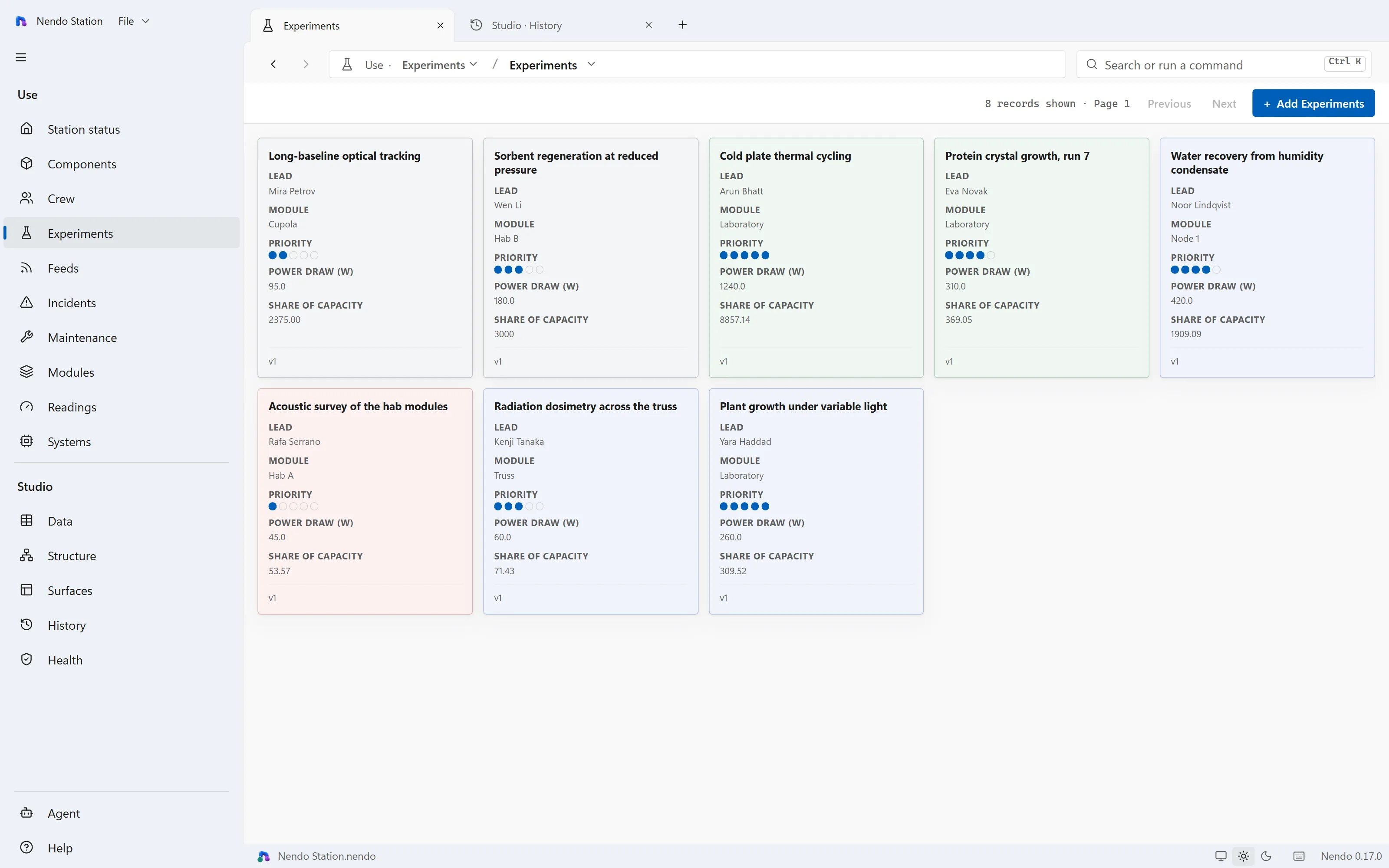
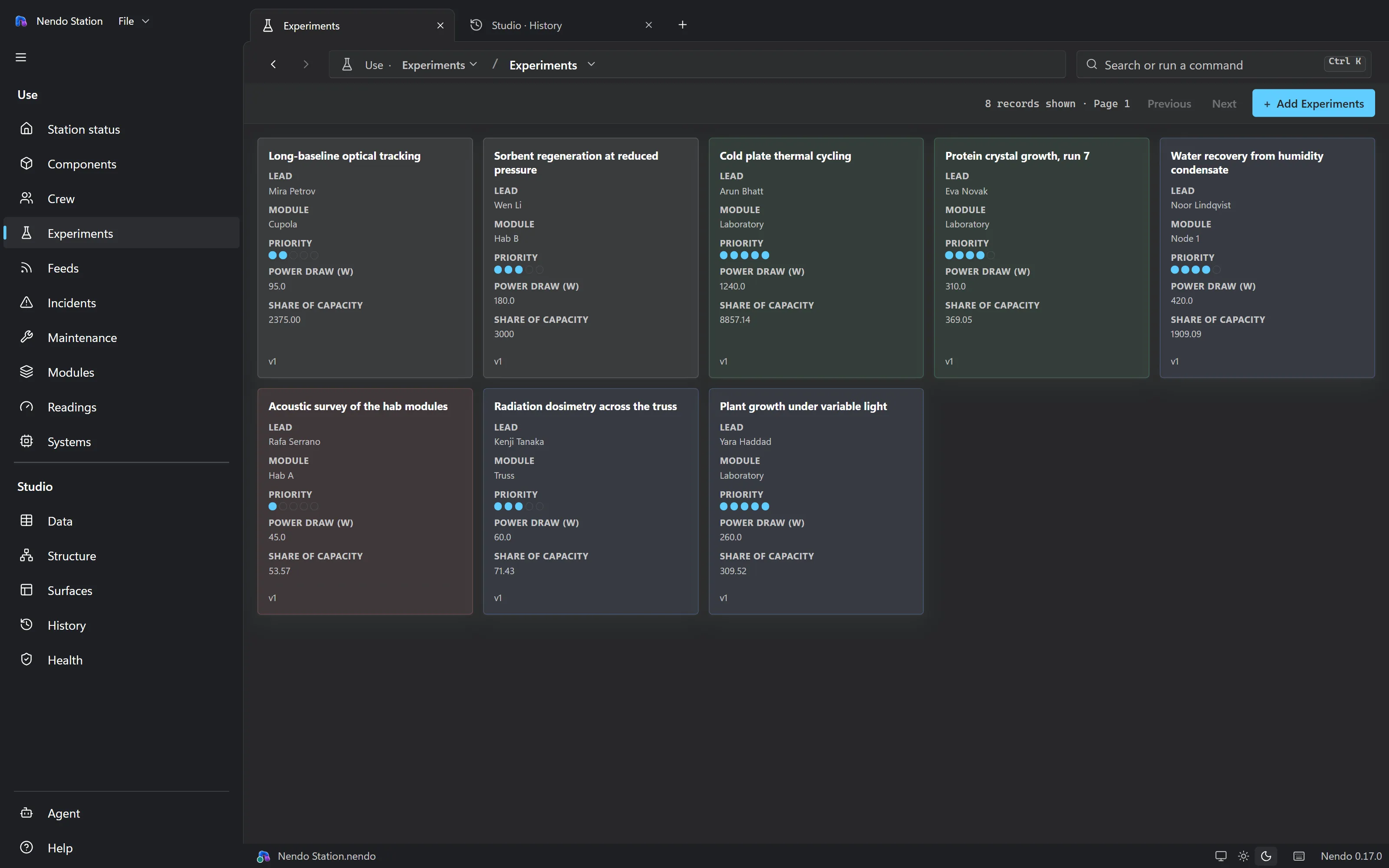
Records as cards, with a rating shown as dots on a fixed scale.
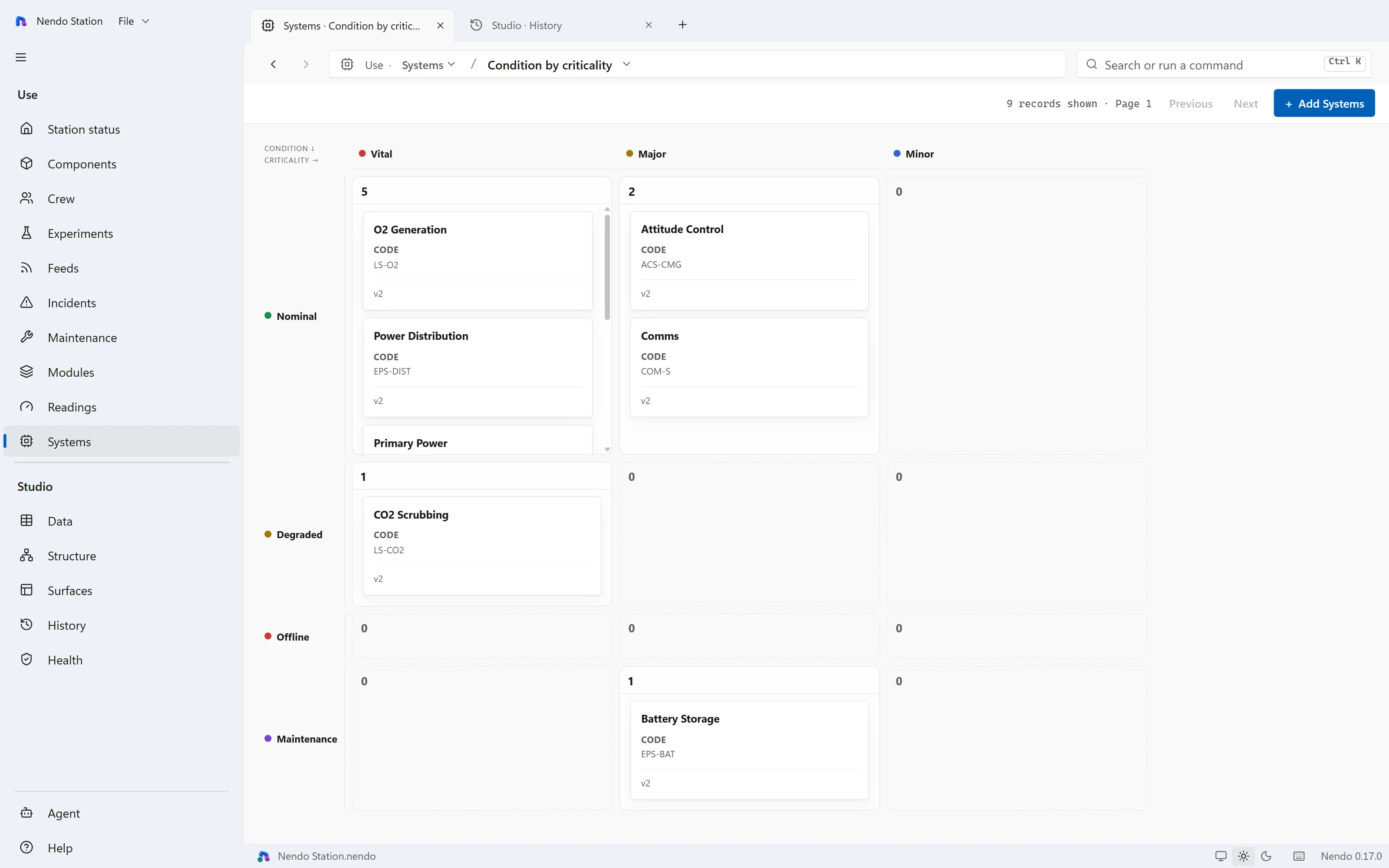
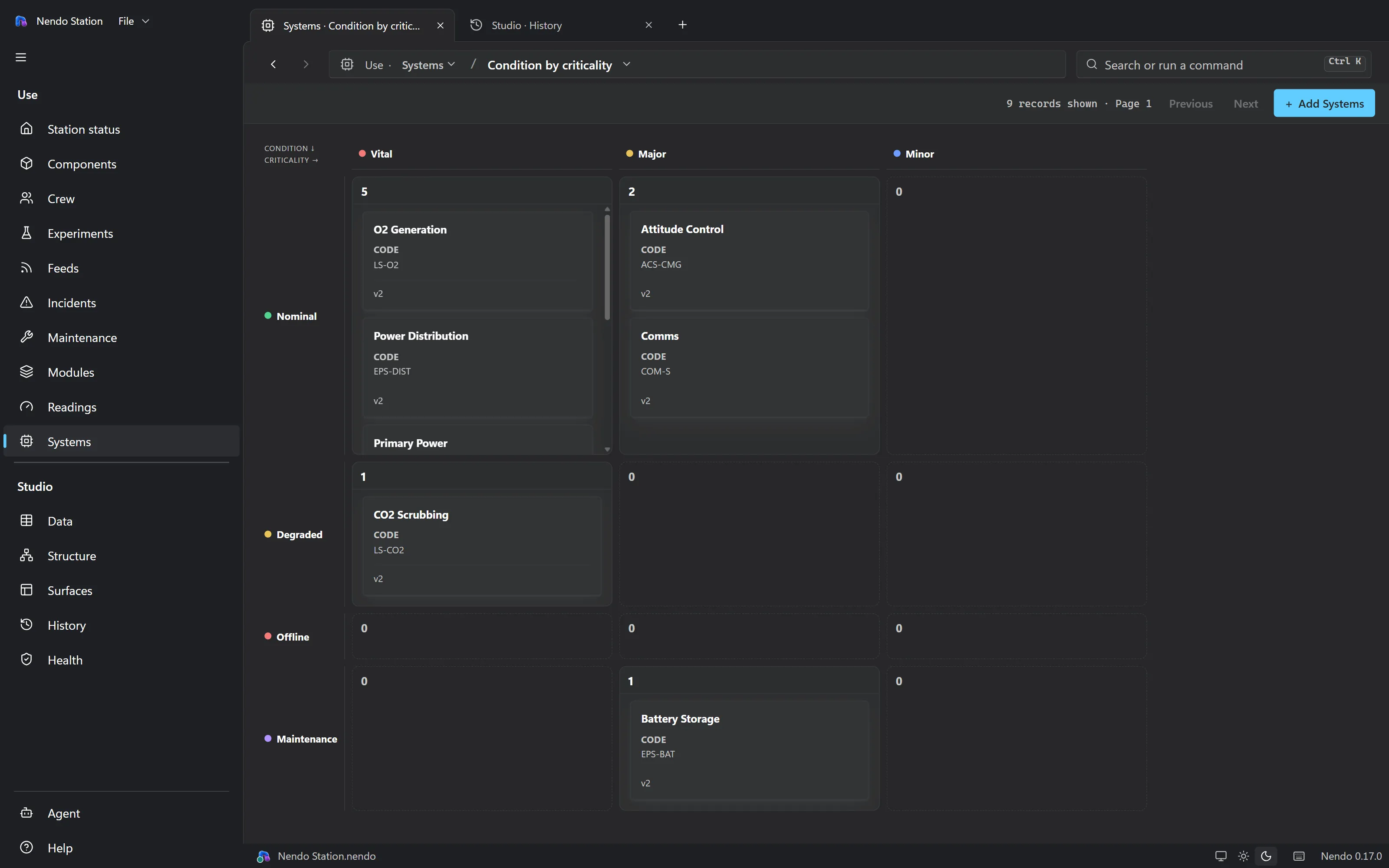
Two choice fields crossed into a grid, with an exact count in every cell, including the empty ones.
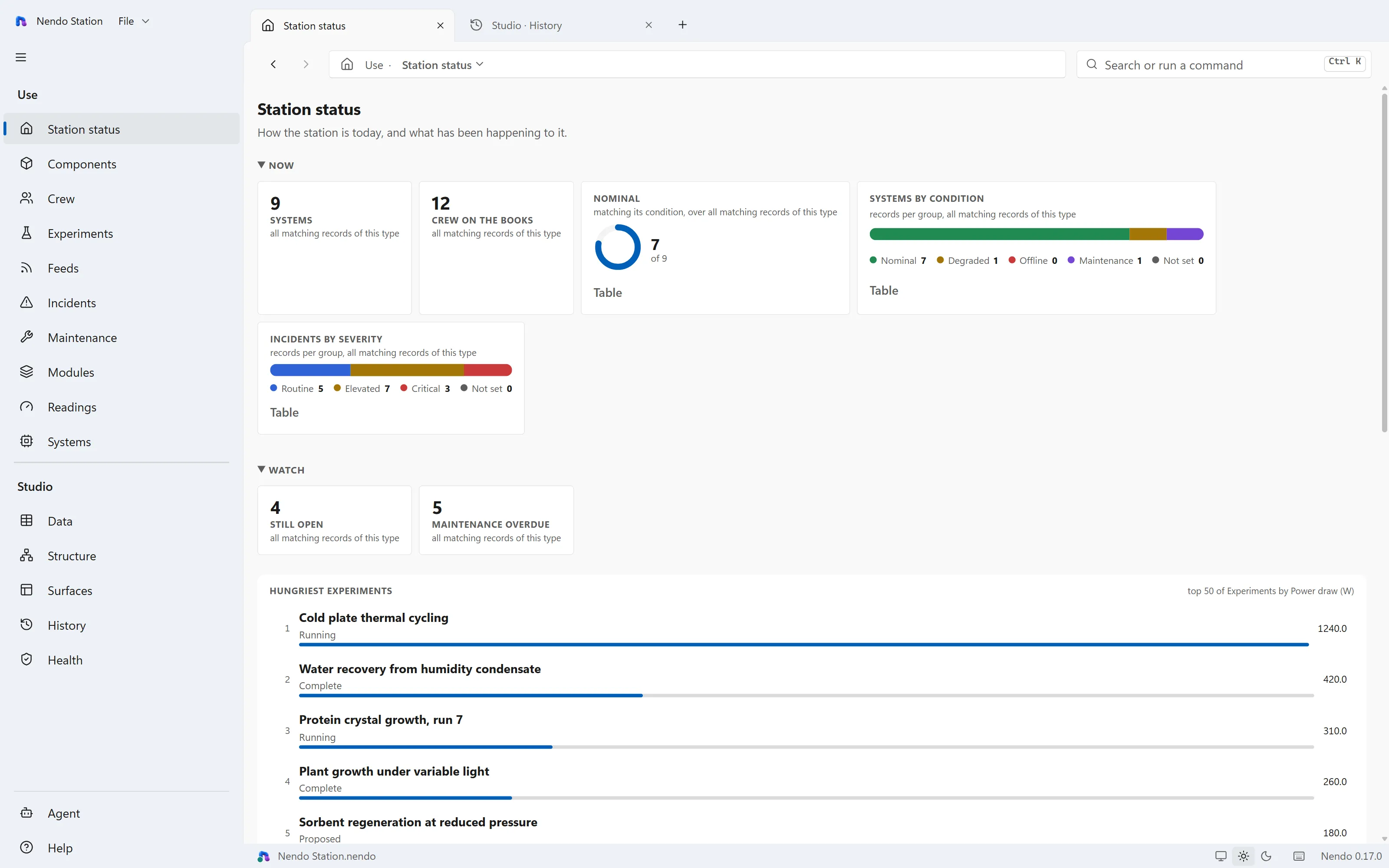
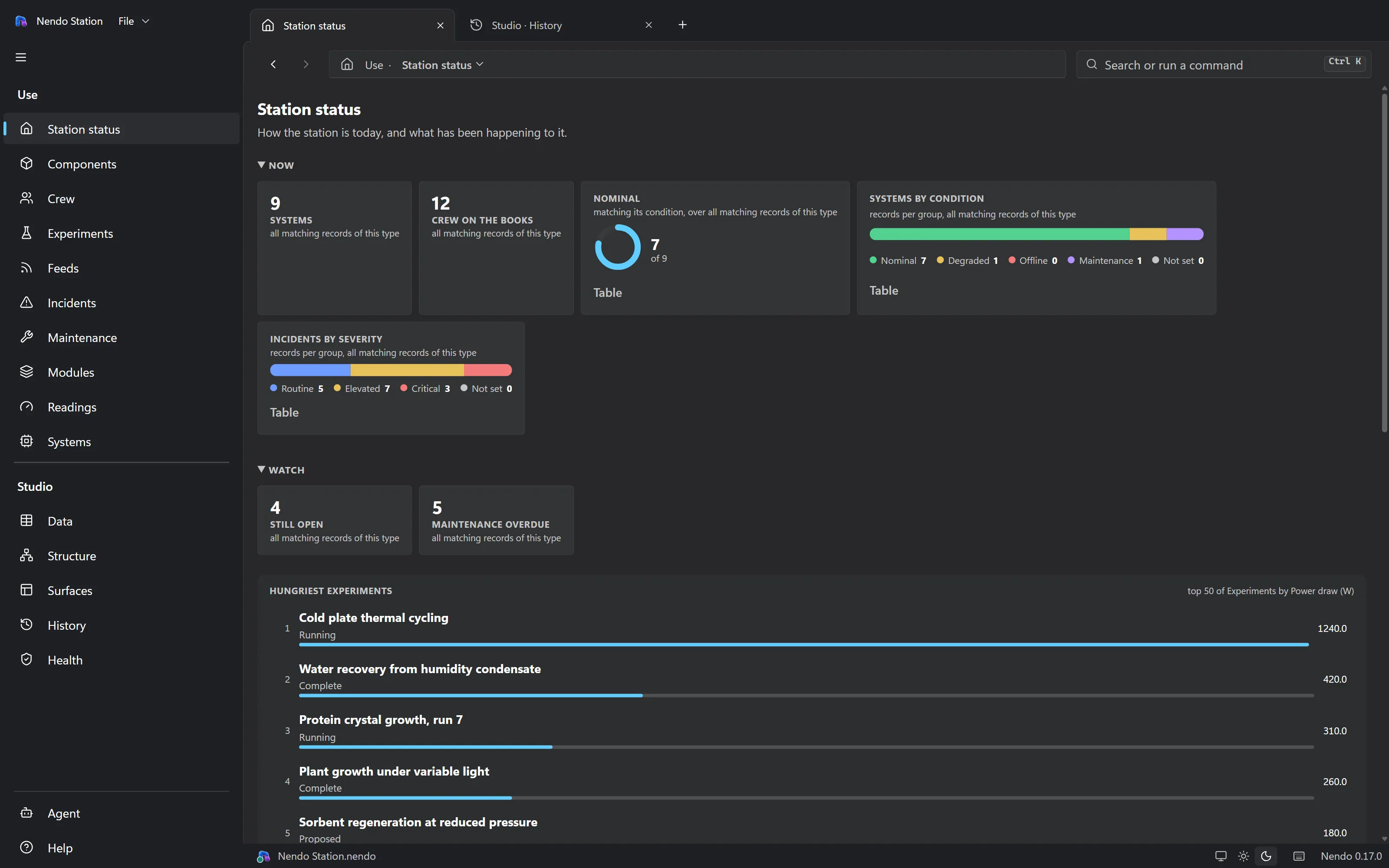
A page for the whole file rather than one record type: counts, a progress ring and a breakdown chart.
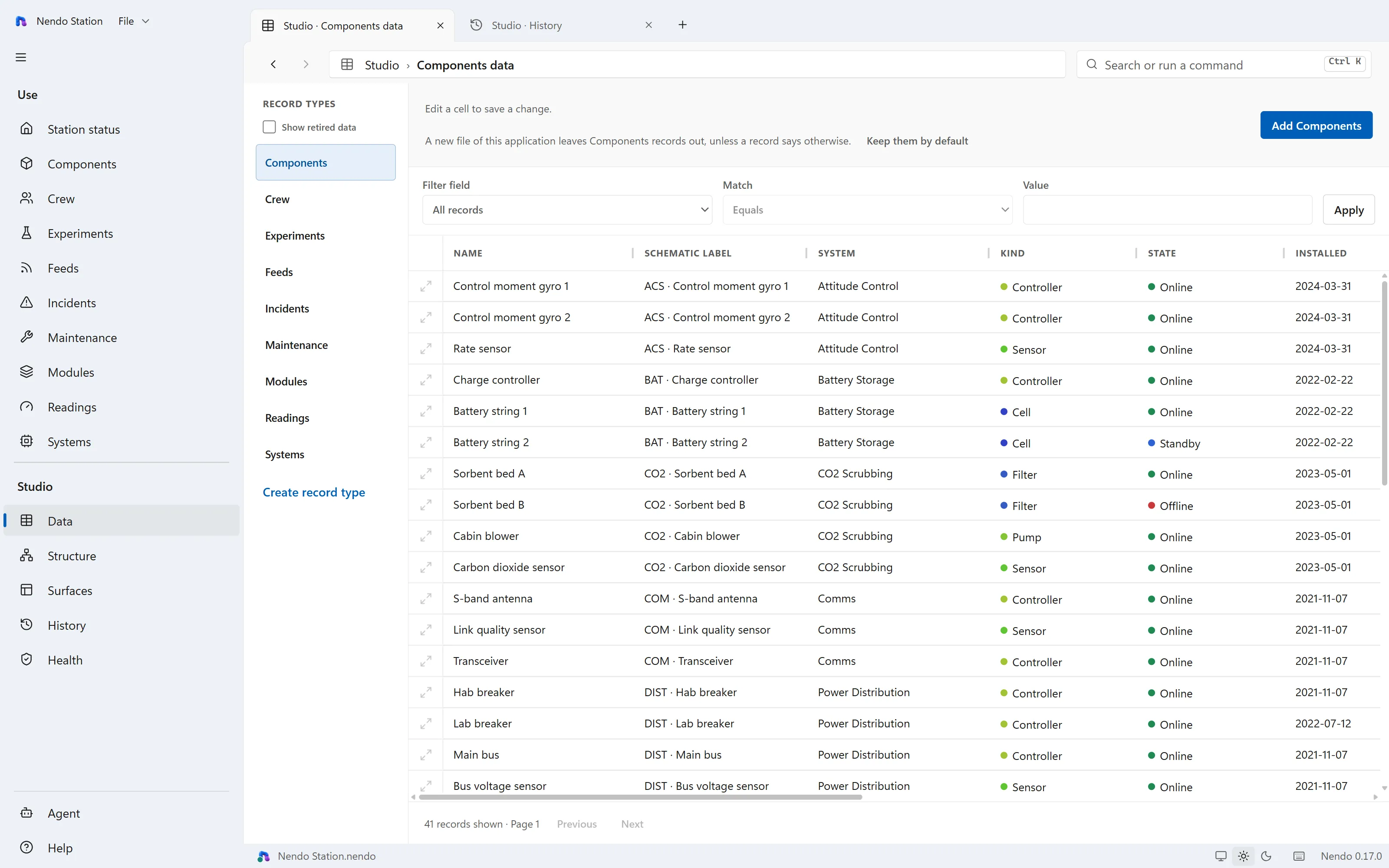
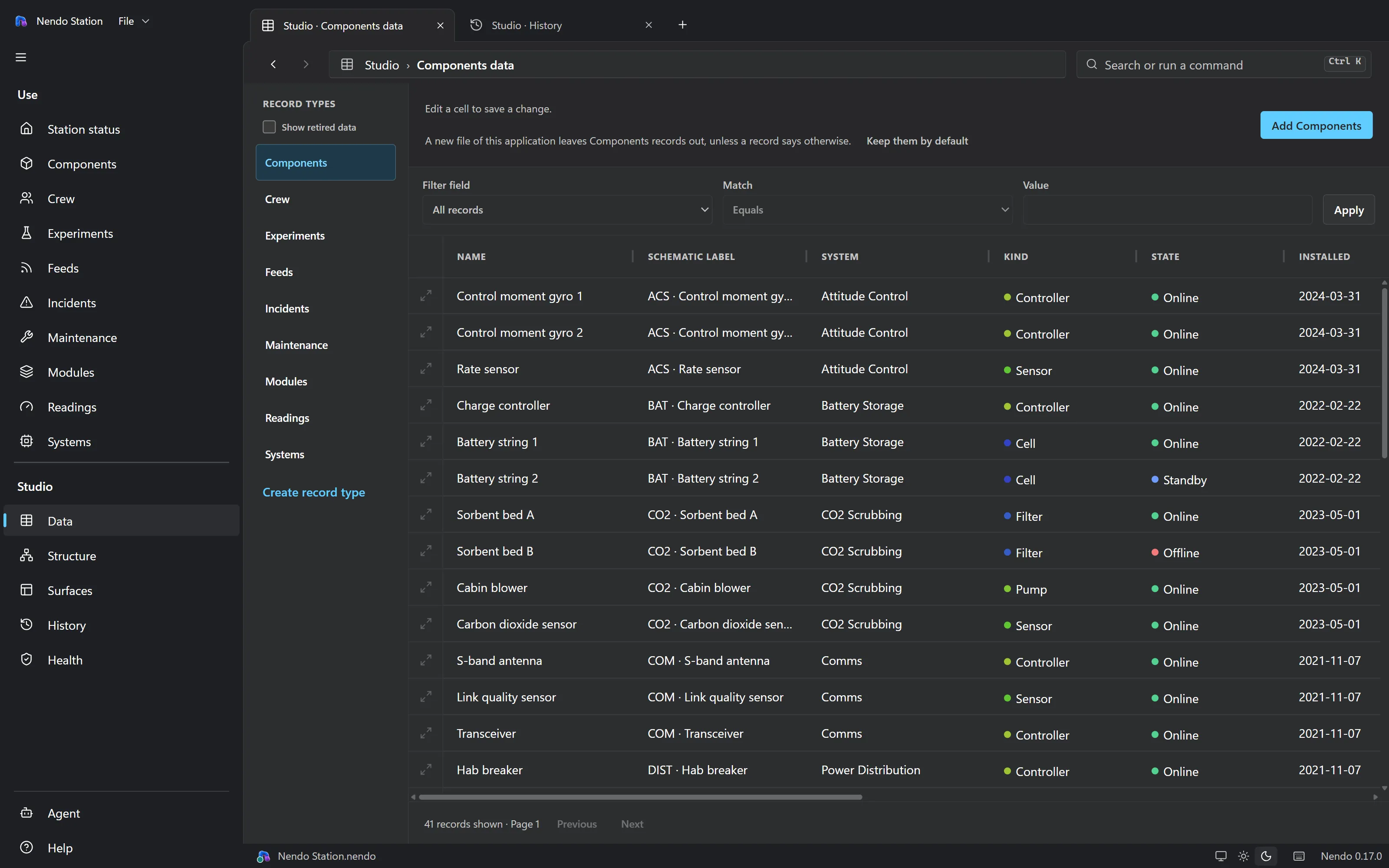
Every valid file opens here, and nothing an application or an agent adds can remove it.
The name
Clay holds its shape, and you can reshape it without starting over. That is the idea: the file you start with is the file you keep, however many changes you or an agent make to it.
A few fixed rules protect that. An empty file is valid. Studio, the built-in table view, can't be removed. Changes are previewed on a copy, never on your data. Every operation states whether it can be undone.
Status
The core loop works end to end. Four reference applications, each shaped differently, put the idea to the test, and two of them were built from an empty file by an agent working only through MCP.
Public releases, code signing, ARM64, cloud sync and other platforms arenot supported. Every usability, scaling and accessibility result so far comes from the author's own testing; nobody else has evaluated it yet.